
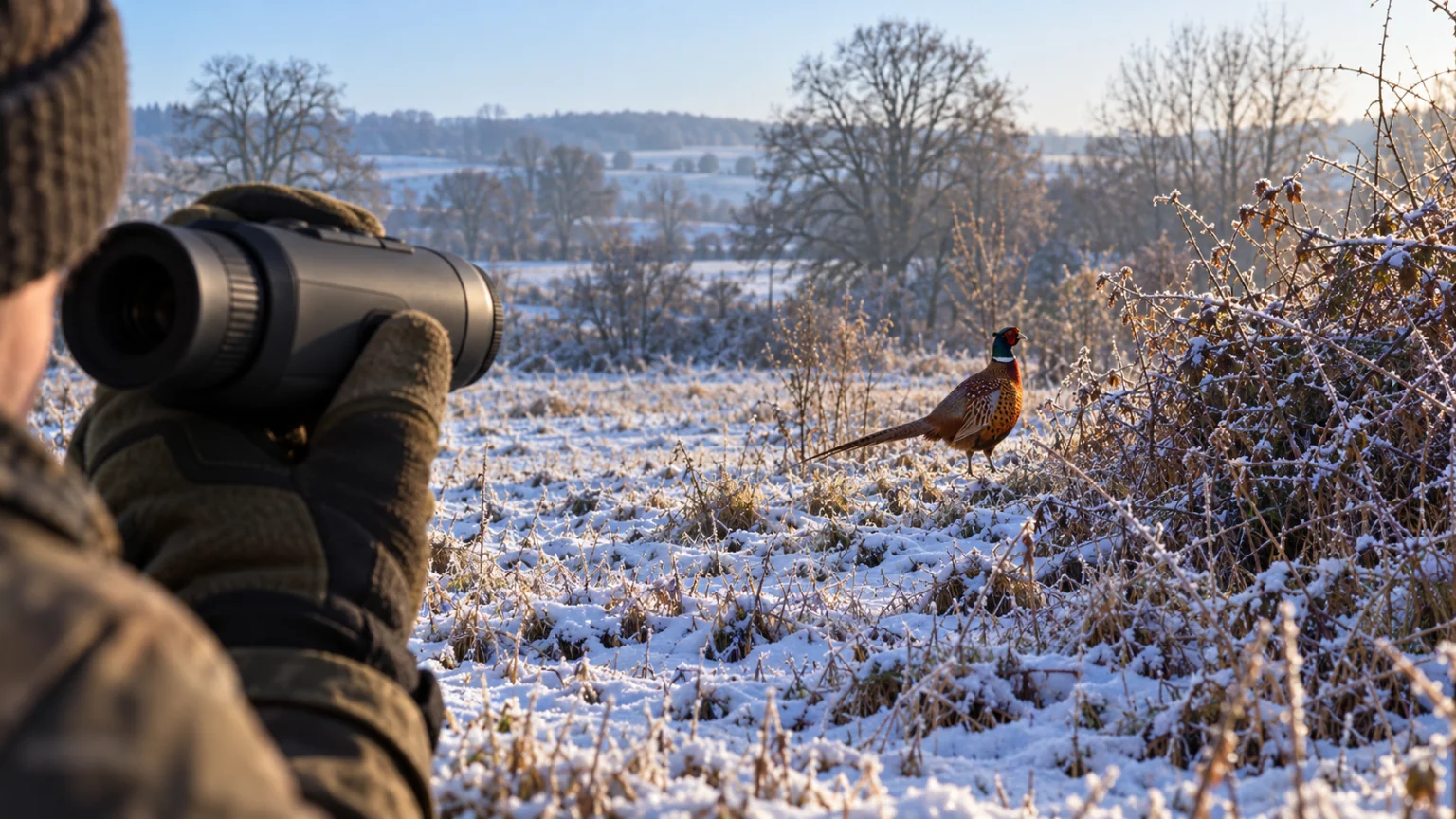
The RIX Pocket K2 vs K3 decision is about a genuine change in detector and optics, rather than a different label on the same image. The K3 uses a 384×288 detector and 15 mm objective; the K2 uses 256×192 and 9 mm. The K3 therefore offers more native samples with a slightly narrower published view, which can be useful when the K2 leaves an exposed subject too small or indistinct.
First check RIX’s official battery recall for the unit’s serial number. Certain earlier K2 and K3 units are included; affected batteries must not be used or charged. Follow the manufacturer’s replacement process before field use. Buying a different Pocket model is not a substitute for resolving an affected battery.
The model-specific differences
The table follows the Pocket Series V3 manual, whose model columns separate K3 and K2. The individual K2 and K3 pages remain useful for identifying the exact products and current seller information.
| Specification | Pocket K2 | Pocket K3 |
|---|---|---|
| Native detector | 256×192 | 384×288 |
| Pixel pitch | 12 µm | 12 µm |
| Objective focal length | 9 mm | 15 mm |
| Base magnification | 1.7× | 2× |
| Horizontal field of view | 19.4° | 17.5° |
| Stated frame rate | 50 Hz | 50 Hz |
| Display | 800×600 OLED | 800×600 OLED |
Use the exact model table rather than assuming every sentence on a shared marketing page describes both variants equally. This comparison does not claim that either instrument has been field-tested here.
What the detector increase actually means
The K2 contains 49,152 detector samples: 256 multiplied by 192. The K3 contains 110,592: 384 multiplied by 288. The ratio is 2.25, so the K3 has 2.25 times as many native samples in total.
That is not the same as making every detail 2.25 times clearer. Across either image dimension, the detector count increases by 1.5 times. Lens choice and scene coverage then affect how many samples land on a particular subject.
The thermal-resolution guide explains why total pixels, linear sampling and useful identification detail need to be kept separate. The K3 has a real native sampling increase, but its practical value depends on the observation.
The K3 also changes the optical view
The published horizontal view narrows from 19.4° to 17.5°, while base magnification increases from 1.7× to 2×. This means you are not comparing two identical views with only a detector swap.
For a bird or animal in a clear gap, more samples concentrated across a somewhat narrower scene can be useful. For finding a subject somewhere along a nearby hedge, the K2’s broader coverage may remain convenient.
Consider the full sequence: searching, locating, inspecting and confirming. If finding the right patch is your main difficulty, a narrower view may add work. If the subject is already located but lacks useful detail, the K3’s configuration addresses a more relevant limitation. Our thermal viewing-field explanation helps interpret that tradeoff.
A shared screen does not erase the native difference
Both models are listed with an 800×600 OLED display. The similar output interface does not mean they capture the same amount of information. The K3 starts with more detector samples before the image is presented on that screen.
Conversely, image enlargement or processing on the K2 does not turn its detector into a 384×288 array. Processing may change presentation, but you should not count simulated or interpolated pixels as independently captured thermal observations.
Compare native views before judging heavy digital enlargement. A more dramatic-looking enlarged image can make it harder to separate genuine subject information from the way the display renders edges.
When the upgrade is more defensible
An upgrade makes the most sense when you can describe the limitation you regularly meet. For example, you repeatedly locate exposed subjects with the K2 but cannot inspect enough structure to support the next observation, and you have checked that the K3’s view and focus behavior suit the same setting.
It is less compelling when the problem is an obscuring barrier, poor setup or an expectation of plumage colors. More samples cannot reveal the parts of a bird hidden behind an opaque branch, and a thermal palette does not show ordinary feather colors.
Use the see-through limitations guide and the thermal birding routine before attributing every missed observation to resolution.
A practical decision table
| Your main issue | What to consider |
|---|---|
| Located, exposed subjects are too poorly sampled | K3 is the more relevant native-detector upgrade to investigate |
| You value the broadest view in this pair | K2 has the wider published horizontal angle |
| The image is uncomfortable or poorly set up | Check eyepiece adjustment, focus instructions and calibration first |
| The subject is concealed behind solid cover | Neither detector change removes the barrier |
| You need visible field marks for bird identification | Add a suitable conventional view when light allows |
This table is a selection framework, not a guarantee of identification at a specified distance. The range guide explains why detection claims should not be promoted into that promise.
Check the ownership side before paying more
Confirm the exact unit and approved power arrangement, especially for used stock or a battery supplied separately. A current product listing and a cleared battery serial are different pieces of evidence. Keep the manufacturer’s applicable instructions with the equipment.
Check current delivered prices, warranty terms for your market and whether the seller can answer model-specific questions. Different bundles can make an apparent price comparison misleading if one includes accessories you would otherwise need to buy.
Also test the file-transfer workflow if recording is important. The same broad feature name does not guarantee that your phone and preferred process will work as expected. Our recording guide covers the practical checks.
What if you have not bought either model?
Choose around the scene before deciding whether to pay for the larger detector. The AGM Taipan V2 10-256 vs Pocket K2 comparison examines another 256-class option; it is not a resolution-upgrade comparison.
For birding, use the thermal monocular buying guide to place both Pockets among the alternatives. The K3 is the more capable native-sampling configuration in this pair on paper. Whether that improvement earns its price depends on a real limitation it solves, suitable handling and a verified safe unit.

Elliot Vantage is an optics enthusiast and the editor behind Optic Horizon, covering monoculars, binoculars, thermal optics, and related outdoor gear. He researches manufacturer documentation, optical specifications, product features, pricing, and use-case differences to help readers understand their options and choose equipment that fits their needs.