
Affiliate Disclosure: OpticHorizon.com is a participant in the Amazon Services LLC Associates Program. We may earn a small commission if you buy through our links — at no extra cost to you. This helps us keep the site running and continue producing free, independent buying guides. Our recommendations are based on research, specifications, and real-world considerations, never on commission rates.
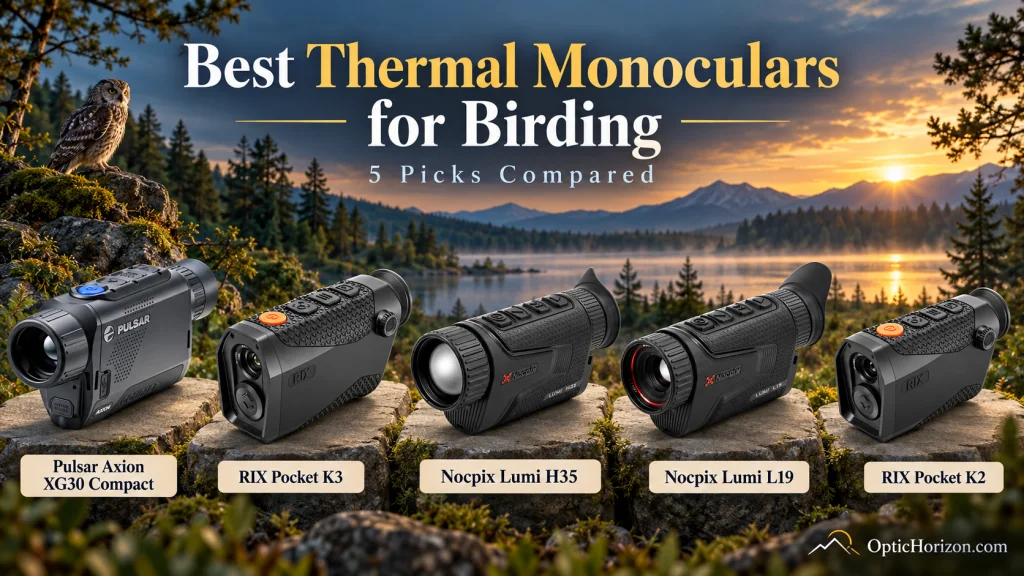
A thermal monocular for birding may help you locate birds in darkness or against a cluttered background. Binoculars, a spotting scope, calls and visible field marks remain important for confirming their identity.
This guide compares five models with different balances of detector resolution, scanning coverage and cost. Start with the Pulsar Axion XG30 Compact for a 640-class option with moderate coverage, or compare the RIX Pocket K3 and Nocpix Lumi L19 for two different approaches within the 384 class. The Lumi H35 offers more concentrated target sampling, while the Pocket K2 provides an entry-level alternative.
Below, we explain each model’s trade-offs, what thermal imaging can reveal and which features matter for your birdwatching.
Best thermal monoculars for birding at a glance
The table lists native detector resolution rather than eyepiece display resolution. Horizontal field of view is the angular width of the scene at base magnification: a larger angle shows more of the surrounding area. The suggested uses reflect our interpretation of the specifications.
| Model | Main reason to consider it | Native detector | Base magnification | Horizontal field of view |
|---|---|---|---|---|
| Pulsar Axion XG30 Compact | 640-class resolution with moderate scanning coverage | 640 × 480 | 2× | 14.6° |
| RIX Pocket K3 | Wider scanning coverage in the 384 class | 384 × 288 | 2× | 17.5° |
| Nocpix Lumi H35 | More concentrated target sampling | 640 × 512 | 2.5× | 12.5° |
| Nocpix Lumi L19 | Tighter viewing angle than the Pocket K3 | 384 × 288 | 2× | 13.8° |
| RIX Pocket K2 | Entry-level option with the widest view here | 256 × 192 | 1.7× | 19.4° |
Resolution and field of view help explain these configurations, but actual image quality also depends on the lens, focus, thermal contrast, processing and viewing conditions.
How we selected these models
This is a research-based buying guide using manufacturer specifications and documentation. We have not conducted a side-by-side field test of these five monoculars.
We selected these models for their detector resolution, field of view, moderate base magnification and practical battery arrangements. Recommendations reflect our interpretation of those features.
We do not treat advertised detection distances as bird-identification distances. Figures based on large animals cannot establish how clearly a small bird will appear.
1. Pulsar Axion XG30 Compact
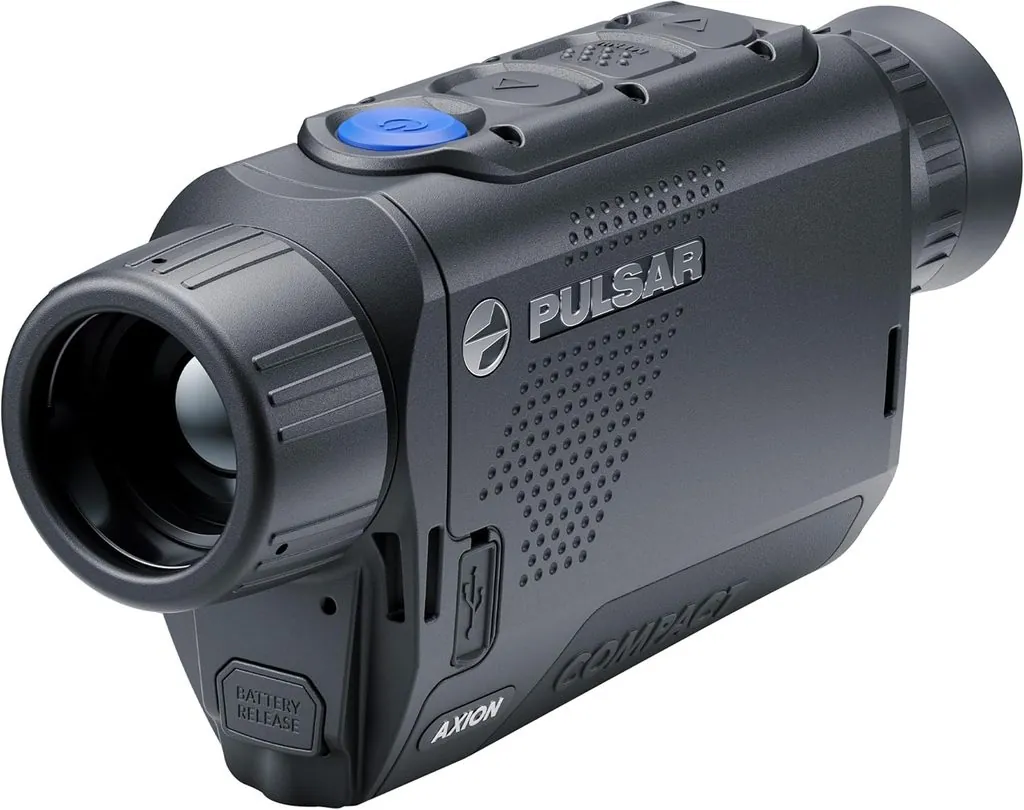
A starting point for birdwatchers comparing premium thermal options.
A balance of resolution and scanning coverage
The Axion XG30 Compact combines a 640 × 480 detector with 2× base magnification and a 14.6° horizontal field of view. Its configuration provides more concentrated target sampling than the wider RIX options while retaining more coverage than the Lumi H35.
Pulsar’s XG30 Compact manual lists a minimum observation distance of 5 meters, a removable APS 3 battery and IPX7 protection. Check that minimum distance if you regularly observe nearby branches or garden birds.
Consider it if you want a higher-resolution option for mixed searching and observation. Its cost is easier to justify when thermal searching is a regular part of your birding.
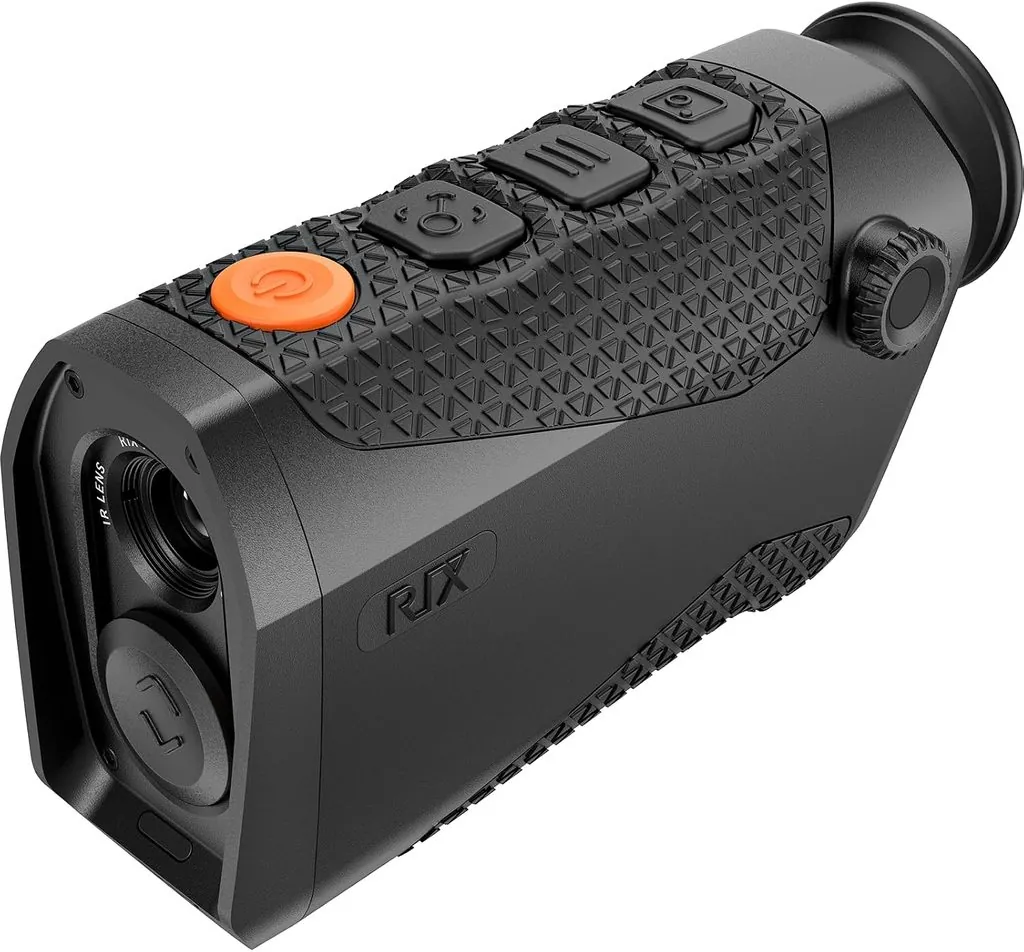
Wider scanning coverage in the 384 class
The RIX Pocket K3 pairs a 384 × 288 detector with a 15 mm lens and 2× base magnification. Its model-specific specifications list a 17.5° horizontal field of view, electronic image stabilization, a replaceable 18650 battery and IP67 protection.
The wider view lets you examine more of the surrounding area at once. The trade-off is that a small target spans fewer detector samples than in a narrower view with the same detector dimensions.
Consider the K3 when broad searching is your priority. Compare it with the Lumi L19 if you are deciding between wider coverage and more concentrated target sampling.
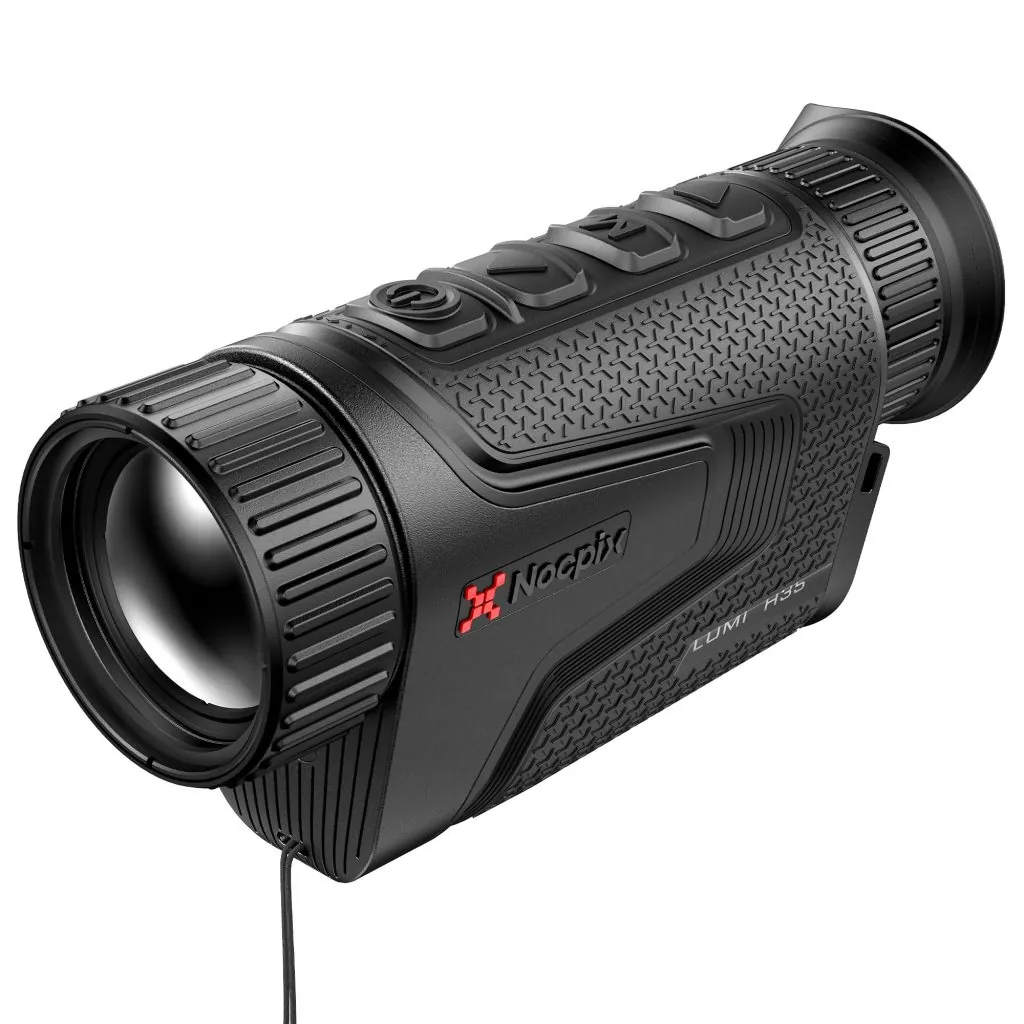
More concentrated sampling of small targets
The Lumi H35 combines a 640 × 512 detector, a 35 mm lens and 2.5× base magnification. The Nocpix Lumi specification table lists a 12.5° horizontal field of view—the narrowest among these five models.
This combination theoretically places the most horizontal detector samples across a target at a given distance in this comparison. That can support your buying decision, but it does not establish a bird-identification range.
The H35 product specifications also list a replaceable 18650 battery and onboard recording.
Consider it when target sampling matters more than broad coverage. Expect to scan more separate views when searching a large area.
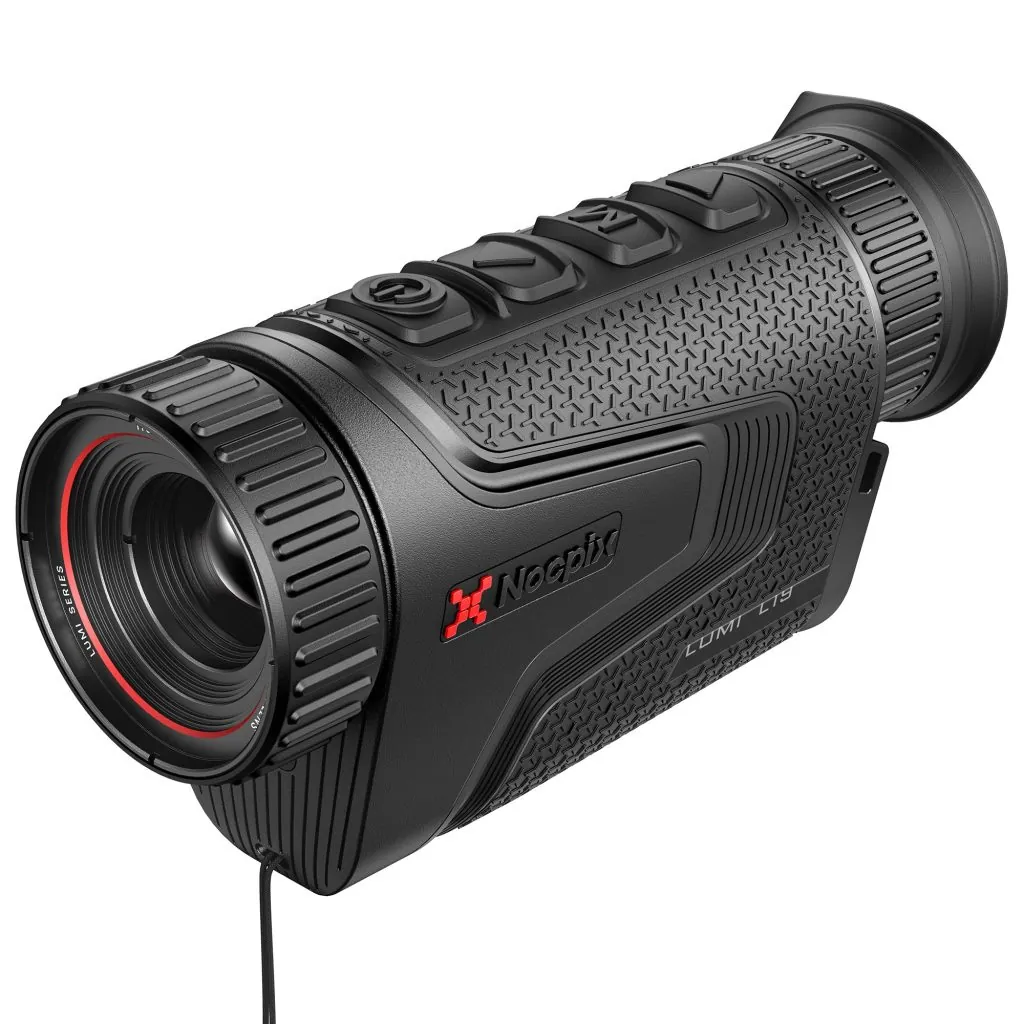
A tighter-view alternative to the Pocket K3
The Lumi L19 uses a 384 × 288 detector, a 19 mm lens and 2× base magnification. Its 13.8° horizontal field of view, listed in the Lumi specification table, is narrower than the Pocket K3’s 17.5°.
Both models have the same detector dimensions, but the L19 distributes its samples across a smaller scene. That means more samples across a target at the same distance, with less surrounding area visible at once.
The L19 product page confirms its replaceable 18650 battery arrangement.
Consider it if you prefer a more concentrated view within the 384 class. Check the exact model when ordering: the L19, L35 and H35 have different optical configurations.
5. RIX Pocket K2
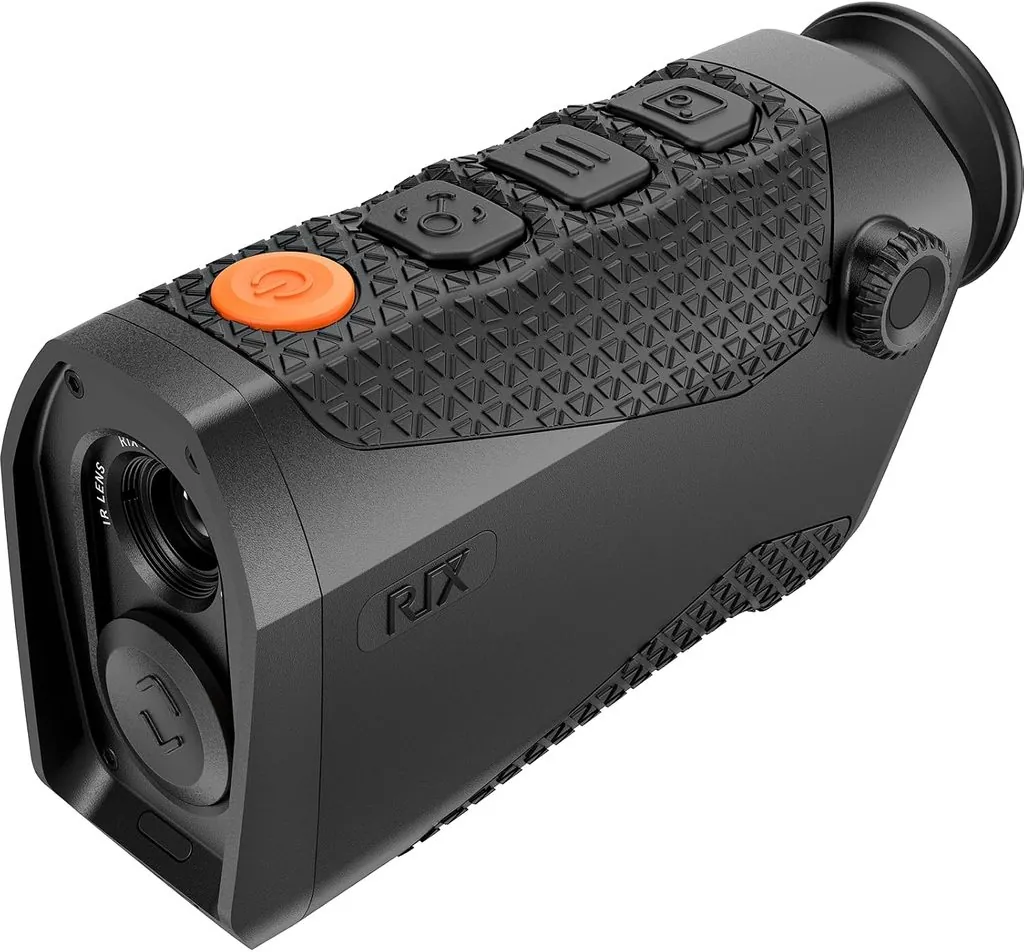
A lower-cost way to explore thermal birdwatching with modest expectations.
An entry-level option for broad searching
The Pocket K2 combines a 256 × 192 detector with a 9 mm lens and 1.7× base magnification. Its manufacturer specifications list a 19.4° horizontal field of view, a replaceable 18650 battery and IP67 protection.
It offers the widest view here, but also the lowest detector resolution. Small, distant birds may occupy only a few detector samples, and digital zoom cannot recover detail that was not captured.
Consider it for basic searching if keeping costs down matters more than small-target detail. For frequent observation of smaller birds at greater distances, compare the higher-resolution options before buying.
What a thermal monocular can do for birdwatching
Thermal imaging detects infrared radiation and displays differences in apparent surface temperature. It does not need visible illumination to form an image.
A bird may stand out when its visible surfaces contrast thermally with the surrounding scene. This may help you find a perched bird in darkness or notice a possible bird through an opening in vegetation. Whether it does so in a particular situation depends on thermal contrast, distance, obstruction, weather and the device.
For a fuller explanation of the technology, see our guide to how thermal monoculars work.
Finding a heat signature and identifying a species are different tasks.
| Task | What it means | Practical limitation |
|---|---|---|
| Detection | Noticing a possible animal or other thermal feature | A warm patch may not be a bird |
| Recognition | Seeing enough shape or movement to judge that it is probably a bird | Similar shapes can remain ambiguous |
| Species identification | Establishing which species is present | Thermal images lack normal plumage colors and may show insufficient detail |
A distinctive outline or behavior can provide clues, but a thermal silhouette alone should not support a confident identification when the evidence is unclear.
What thermal imaging cannot reliably do
See through solid vegetation
Thermal imaging does not provide a clear view through tree trunks, solid foliage or other opaque barriers. You may detect exposed parts of a bird through gaps, but that is different from seeing through the obstruction.
FLIR’s explanation of thermal-imaging limitations describes how materials block the view and how weather can reduce performance.
A partly hidden bird may present only a small thermal feature. A completely obstructed bird may remain invisible.
Show normal feather colors
The colors in a thermal palette represent the displayed thermal signal. They do not reproduce a bird’s natural colors.
You should not expect a thermal monocular to reveal a colored wing bar, eye stripe or other visible plumage feature in the way binoculars do.
Deliver consistent results in every condition
Thermal contrast changes with the scene. Sun-warmed surfaces can complicate searching, while rain, fog and atmospheric conditions may reduce useful performance. The extent of any effect depends on the conditions and device.
Feathers also insulate birds. The monocular observes radiation from visible surfaces rather than directly displaying the animal’s internal body temperature.
Give a universal bird-detection range
Bird size, posture, distance, obstruction and thermal contrast all matter. A large exposed bird and a small bird partly hidden among branches present very different targets.
Avoid buying on the assumption that a manufacturer’s maximum detection figure predicts your results with birds. Such figures are not universal bird-detection or identification distances.
Why resolution and field of view must be considered together
A higher-resolution detector provides more samples, but the width of the scene determines how many of them fall on a particular target.
Consider a simplified geometric example: a fully exposed target measuring 20 centimeters horizontally at 50 meters. Using the manufacturers’ published scene widths, its approximate horizontal span on each native detector would be:
| Model | Approximate horizontal detector samples across the target |
|---|---|
| RIX Pocket K2 | 3 |
| RIX Pocket K3 | 5 |
| Nocpix Lumi L19 | 6 |
| Pulsar Axion XG30 Compact | 10 |
| Nocpix Lumi H35 | 12 |
We estimated target sampling by dividing the target’s width by the scene width at 50 meters, then multiplying by the detector’s horizontal resolution. The rounded figures describe geometric sampling, not measured image detail or bird-identification distances.
A narrower view places more detector samples across the same target, while a wider view shows more surrounding habitat. Focus, thermal contrast, obstruction and optical performance affect the actual result.
Our guide to thermal monocular resolution explains the difference between native detector detail, display resolution and digital enlargement.
How to choose a thermal monocular for birding
Start with your usual habitat
For searching broad areas, give field of view serious attention. For examining smaller targets at greater distances, consider detector resolution alongside scene width.
Dense vegetation can limit any model regardless of its specifications. Spending more cannot remove an opaque obstruction.
Compare native resolution, not the display
A high-resolution eyepiece screen does not turn a lower-resolution detector into a higher-resolution one.
Check the detector specification first. Then consider the lens, field of view and starting magnification.
Treat digital zoom as a viewing aid
Digital zoom enlarges captured information. Processing may make the enlarged image easier to interpret, but it does not create new measurements of the bird.
A large maximum magnification number is therefore a weak reason to choose one model over another unless the underlying detector and optical configuration also suit your needs.
Check close focus and eyepiece fit
If you watch nearby branches, ask for the minimum observation or focusing distance for the exact model.
Glasses wearers should also check whether they can see the full display comfortably. A demonstration or suitable return policy can help resolve fit questions that a specification table cannot answer.
Consider the complete carrying setup
Compare weight with the battery installed, then account for spare batteries and the case. Manufacturer weight conventions can differ.
Think about how you will switch between thermal and binocular views. Keep both accessible so you can relocate a bird before it moves.
Plan for your actual observation time
Replaceable batteries can be useful during longer outings. Follow the manufacturer’s instructions for compatible cells, charging and storage.
Published runtime may change with temperature, recording and wireless use. Allow some margin rather than planning around the maximum advertised figure.
How to use thermal alongside binoculars
An effective routine keeps thermal searching and species confirmation connected:
- Begin at the lowest magnification to retain the widest view.
- Scan slowly, pausing at gaps, exposed branches and habitat edges.
- Examine promising features for shape or movement without approaching.
- Note nearby landmarks so you can relocate the position.
- Switch to binoculars or a spotting scope when there is enough visible light.
- Record the identification only to the level supported by your observations.
Start with a simple palette such as white hot or black hot, then adjust brightness and contrast for the scene. No palette is universally best; the most useful setting depends on the scene and observer.
Thermal should also complement listening. Calls may help direct your search, but uncertainty should remain explicit when the visual and acoustic evidence is incomplete.
Responsible thermal birding
Locating a bird more easily creates a responsibility to avoid disturbing it.
The American Birding Association’s Code of Birding Ethics emphasizes bird welfare, habitat protection and respect for access restrictions.
Keep your distance from nests and roosts. Avoid repeatedly approaching a bird to obtain a clearer image, and stop if your presence changes its behavior. Follow reserve opening hours and any restrictions on nighttime access.
Using thermal passively does not require shining a light at the bird. Maintain that advantage by observing quietly from a suitable distance.
Frequently asked questions
Is a thermal monocular worth it for birding?
It may be worthwhile if finding birds in darkness or difficult viewing conditions is a regular part of your birding.
For someone mainly watching birds in daylight, good binoculars are usually the more useful first purchase. Thermal adds a locating capability; binoculars provide familiar detail for identification.
Can a thermal monocular detect small birds?
Sometimes, when the bird is sufficiently exposed, close enough and thermally distinguishable from its surroundings.
Small birds occupy fewer detector samples as distance increases. No model here comes with a verified universal small-bird detection distance, and the specifications alone cannot establish one.
Is a 384 detector enough?
A 384-class model may be useful for searching, but suitability depends on distance, target size, field of view, contrast and obstruction.
It offers fewer detector samples than a comparable 640-class configuration with similar optical coverage. That difference may matter most when a bird occupies only a small part of the image, but it does not by itself predict field performance.
Can you use thermal through a window?
Ordinary window glass generally blocks the long-wave infrared radiation used by these monoculars. Viewing through a closed window will not provide the same scene as observing directly outdoors.
Use an unobstructed view rather than expecting thermal to work like binoculars through glass.
Does thermal work during daylight?
Yes. Thermal imaging does not require darkness.
However, daylight can warm the background and change contrast. Follow the manufacturer’s instructions concerning exposure to the sun and other intense energy sources.
Can thermal replace a normal monocular?
For general daytime observation and plumage identification, conventional optics remain useful.
If your main goal is enjoying visible detail during walks, our guide to the best monoculars for hiking covers a more appropriate type of optic.
Final Verdict: Which model should you choose?
Start with the Pulsar Axion XG30 Compact if you want a 640-class detector with moderate scanning coverage. Its 14.6° horizontal field of view provides a middle ground between the wider RIX options and the narrower Lumi H35.
Within the 384 class, choose between the Pocket K3’s broader coverage and the Lumi L19’s more concentrated view. Consider the Lumi H35 when target sampling takes priority, or the Pocket K2 when keeping costs down matters more than small-target detail.
Choose a thermal monocular for birding around your habitat, typical viewing distances and budget. Keep conventional optics available for visible field marks, and confirm identifications only when the evidence supports them.

Elliot Vantage is an optics enthusiast and the editor behind Optic Horizon, covering monoculars, binoculars, thermal optics, and related outdoor gear. He researches manufacturer documentation, optical specifications, product features, pricing, and use-case differences to help readers understand their options and choose equipment that fits their needs.