Affiliate Disclosure: OpticHorizon.com is a participant in the Amazon Services LLC Associates Program. We may earn a small commission if you buy through our links — at no extra cost to you. This helps us keep the site running and continue producing free, independent buying guides. Our recommendations are based on research, specifications, and real-world considerations, never on commission rates.
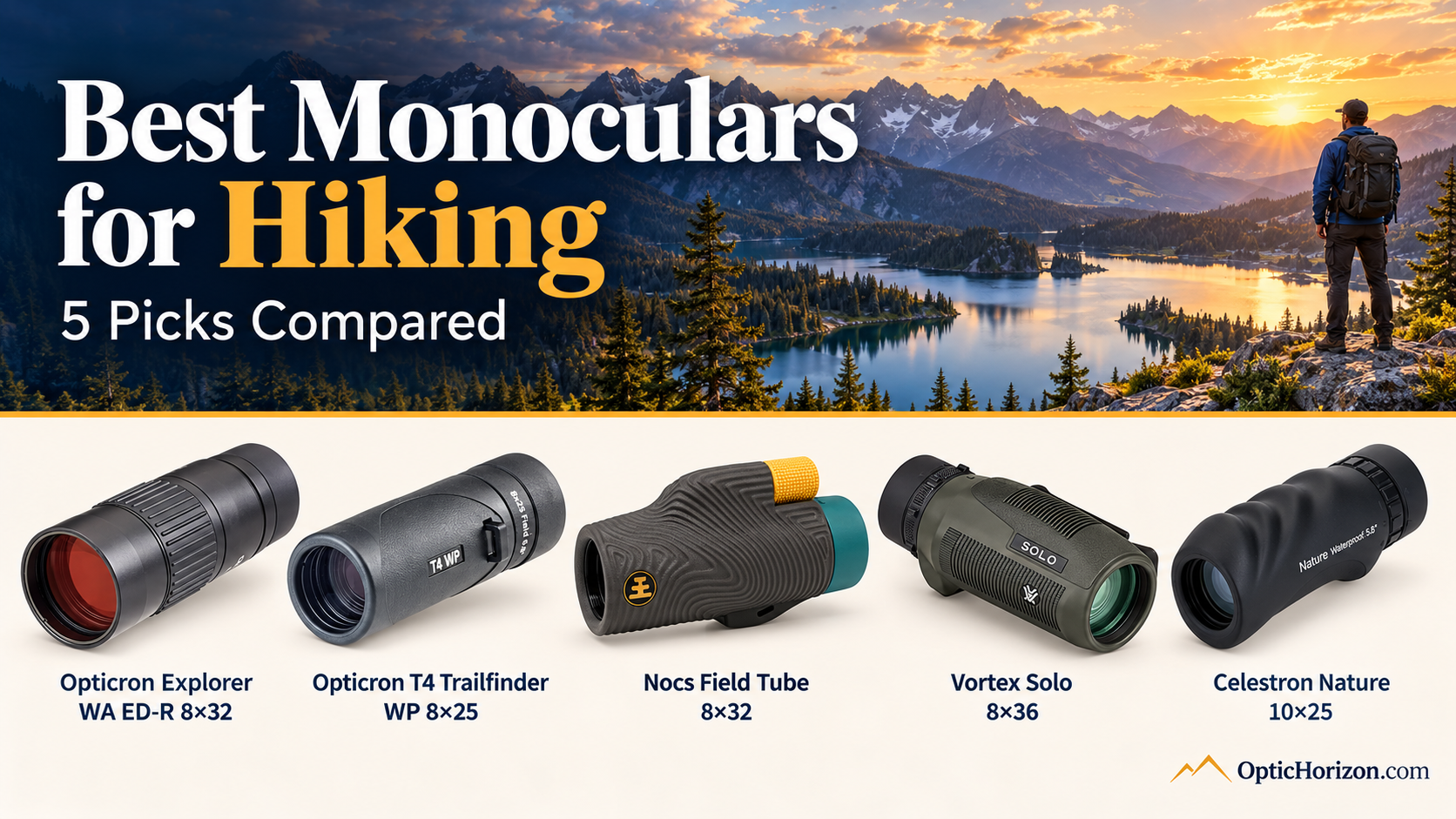
A good monocular for hiking makes it easier to inspect a distant ridgeline, watch wildlife or examine a bird without carrying full-size binoculars. The challenge is choosing one that provides a useful view while remaining convenient enough to take on every walk.
Our overall recommendation is the Opticron Explorer WA ED-R 8×32. Its combination of viewing width, eye relief and close focus suits varied trail observation. For a smaller option, consider the Opticron T4 Trailfinder WP 8×25.
The best choice still depends on how you hike. Below, we compare five models with different strengths, explain their limitations and show which specifications matter most.
In This Guide
Best Monoculars for Hiking at a Glance
| Monocular | Recommended role | Stated weight | Field of view at 1,000 yards | Eye relief | Close focus | Check price |
|---|---|---|---|---|---|---|
| Opticron Explorer WA ED-R 8×32 | Best overall balance for trail observation | 260 g / 9.2 oz | 408 ft | 18 mm | 6.6 ft | Check on Amazon |
| Opticron T4 Trailfinder WP 8×25 | Best compact option | 131 g / 4.6 oz | 357 ft | 17 mm | 4.9 ft | Check on Amazon |
| Nocs Field Tube 8×32 | Wide-view option with an explicit IPX7 rating | 240 g / 8.5 oz | 405 ft | 16.5 mm | 9.8 ft | Check on Amazon |
| Vortex Solo 8×36 | Larger-objective option | 9.7 oz / approximately 275 g | 393 ft | 18 mm | 16.4 ft | Check on Amazon |
| Celestron Nature 10×25 | Compact option with more magnification | 6 oz / 170.1 g | 304 ft | 14 mm | 18 ft | Check on Amazon |
These are manufacturer specifications, not our measurements. Converted weights are approximate. Cases, straps and other accessories add to the weight you carry.
The recommendation labels apply to this shortlist rather than every monocular on the market. Prices and retailer availability can change; compare the exact model and magnification before ordering.
How We Selected These Monoculars
This is a research-based buying guide. We have not physically tested the products featured here.
We compared manufacturer documentation with the needs of hikers in mind: locating subjects quickly, observing both nearby and distant wildlife, carrying the optic conveniently and dealing with changing weather.
Our main selection criteria were:
- Useful magnification for handheld observation.
- Field of view and close-focus distance.
- Eye relief and adjustable eyecups.
- Weight and dimensions.
- Documented water protection.
- Optical construction and included carrying accessories.
We did not treat a higher magnification number, an ED-glass label or a larger objective as proof of superior performance. Those features need to be considered together.
Specifications also cannot establish focusing feel, actual edge sharpness or long-term durability. Our recommendations describe the advantages suggested by the documented designs, not claimed field-test results.
For more information, see how Optic Horizon researches its buying guides.
1. Opticron Explorer WA ED-R 8×32 — Best Overall for Trail Observation
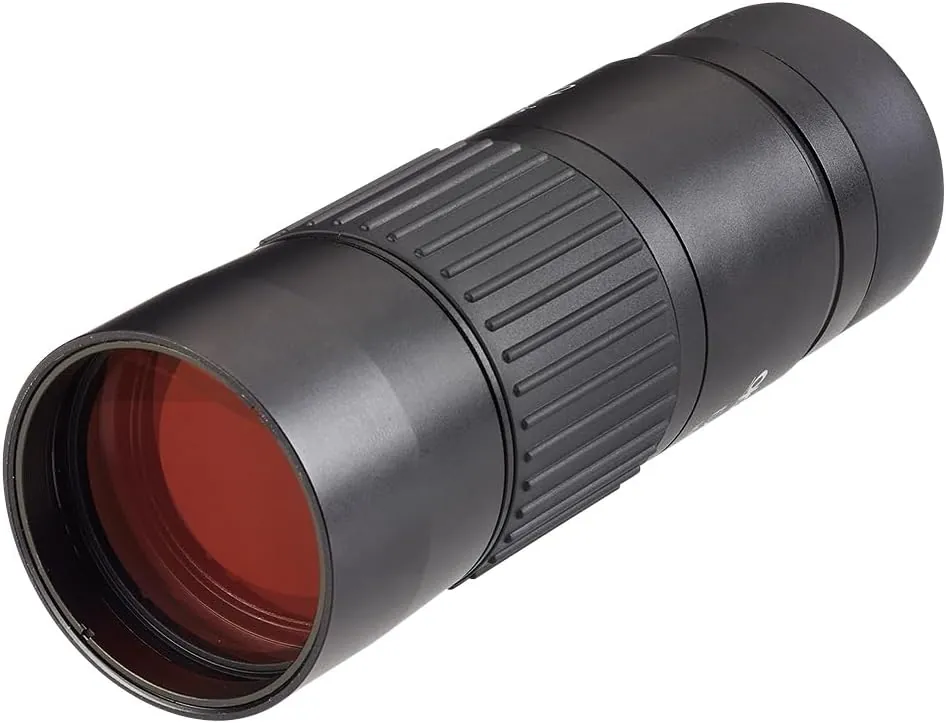
The Explorer earns our overall recommendation through its combination of a broad view, short close focus and generous stated eye relief. That balance suits hikes where your attention shifts between nearby wildlife and distant scenery.
Opticron’s manufacturer documentation lists an ED-glass objective, phase-corrected roof prism, fully multi-coated optics and nitrogen-filled waterproof construction.
It measures 120 × 50 × 43 mm. Importantly, Opticron lists no external armor, so do not mistake its waterproof construction for a rubber-protected body.
Its principal compromise is carrying size and weight compared with a small 25 mm model. We also would not claim that ED glass alone proves it sharper than the alternatives.
Choose it when observing wildlife is a regular part of your hikes and you want a versatile specification set. Choose the smaller Trailfinder when occasional viewing and pocket convenience matter more.
2. Opticron T4 Trailfinder WP 8×25 — Best Compact Monocular for Hiking
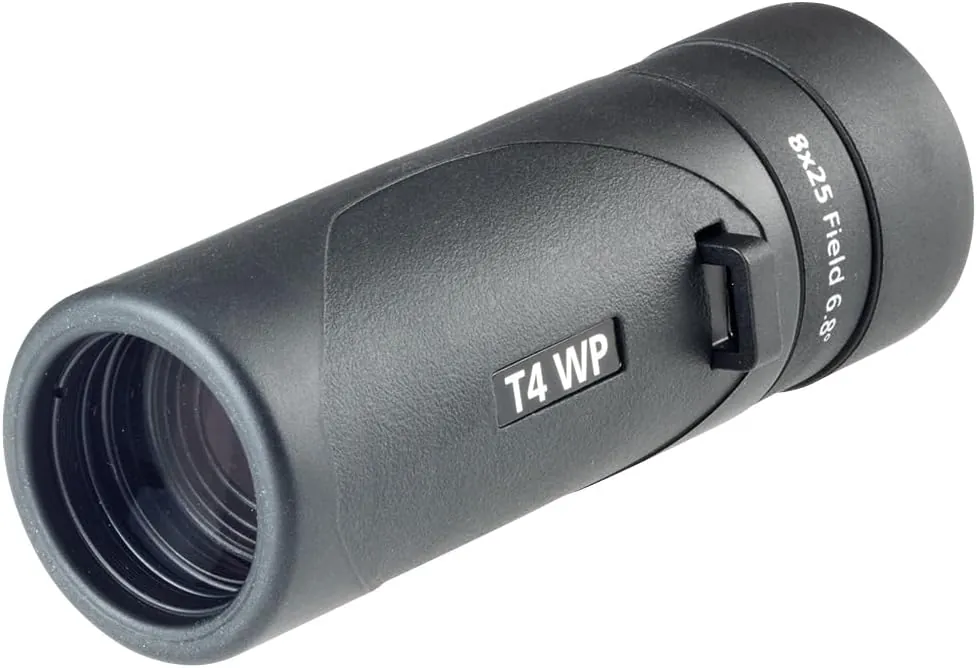
The Trailfinder is the smallest, lightest choice in this comparison, making it a useful option for hikers who want an optic for brief stops rather than extended observation.
Its particularly short close-focus distance also makes it interesting for nearby nature subjects.
According to Opticron’s T4 Trailfinder specifications, the body measures 100 × 38.6 × 34.6 mm. It has rubber armor, nitrogen-filled waterproof construction, fully multi-coated optics and a retractable eyecup.
The trade-off is its smaller objective and narrower stated view than the 32 mm options. It favors portability over the larger exit pupil available from bigger models at the same magnification.
Choose it for casual nature walks and daytime hikes where you want something easy to keep close at hand. Its short focusing distance is also a reason to consider it even when weight is not your main concern.
3. Nocs Field Tube 8×32 — A Wide-View Option for Wet-Weather Hikes
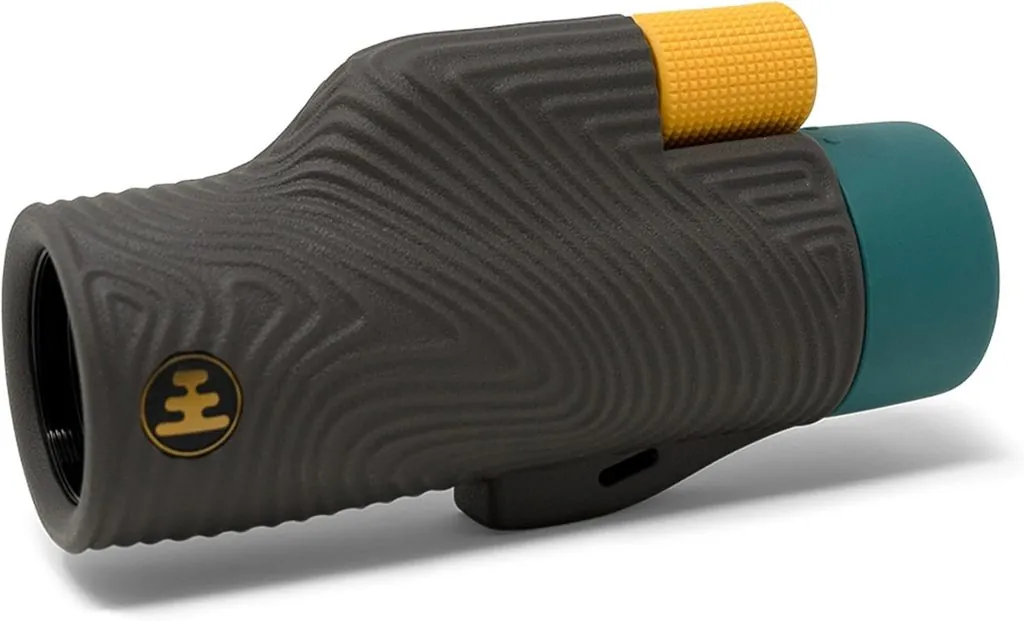
The Field Tube combines a broad view with an explicitly documented water-protection rating.
The Nocs specification table lists IPX7 protection at one meter for 30 minutes, nitrogen filling, fully multi-coated optics and tripod compatibility. Its dimensions are 129 × 47 × 69 mm.
Compared with the Explorer, it is a little lighter, but its stated close-focus distance is longer and eye relief is shorter. Their field-of-view figures are very similar; the small numerical difference should not decide your purchase.
The bulkier body also deserves attention if you plan to carry it in a narrow pocket.
Choose the Field Tube if its shape, controls and stated protection match your preferences. Check that you are ordering the Field Tube rather than assuming specifications from another Nocs model apply.
4. Vortex Solo 8×36 — Best Larger-Objective Option
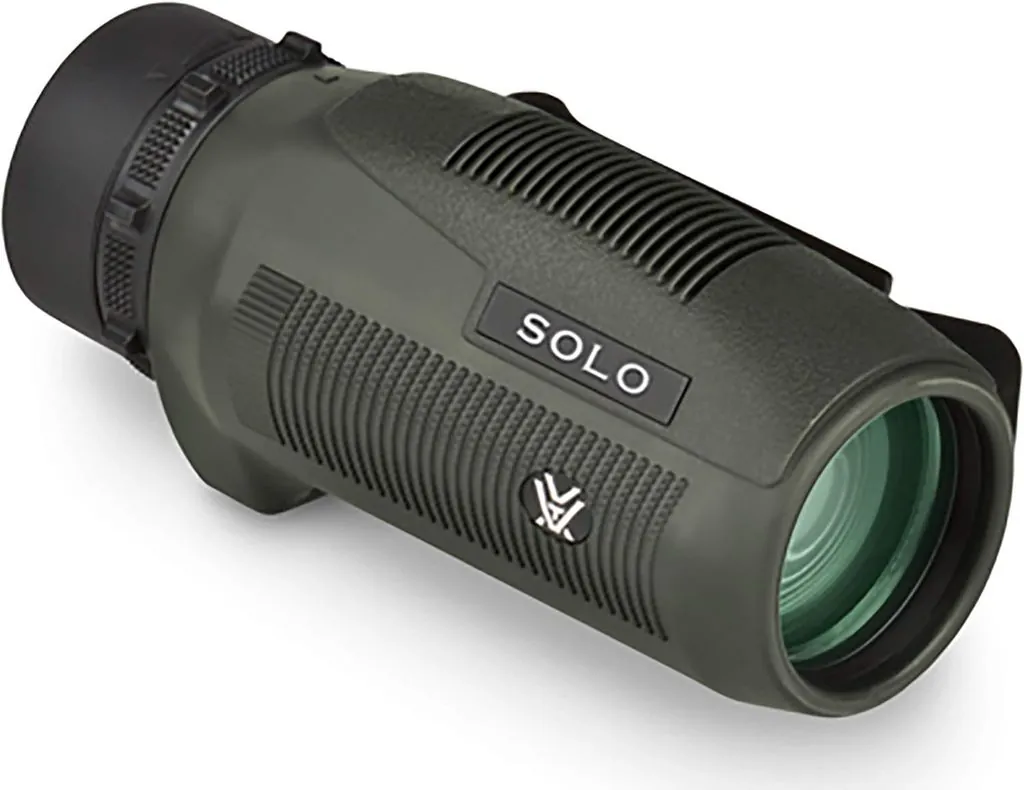
The Solo 8×36 is worth considering when you are willing to carry more for a larger objective and 18 mm of stated eye relief.
Its calculated exit pupil is 4.5 mm. That can be useful in reduced light, although the benefit depends on your pupil size, optical transmission and viewing conditions.
Vortex’s official specifications list fully multi-coated lenses, nitrogen purging, waterproof and fogproof construction, and an included utility clip. The body is 4.9 inches long.
This is the heaviest selection, and its minimum focusing distance makes it less suitable for nearby nature observation.
Choose it when your hikes involve more distant subjects and you value its larger exit pupil. The Explorer is the more versatile starting point if close observation is also important.
5. Celestron Nature 10×25 — Best Compact 10× Option
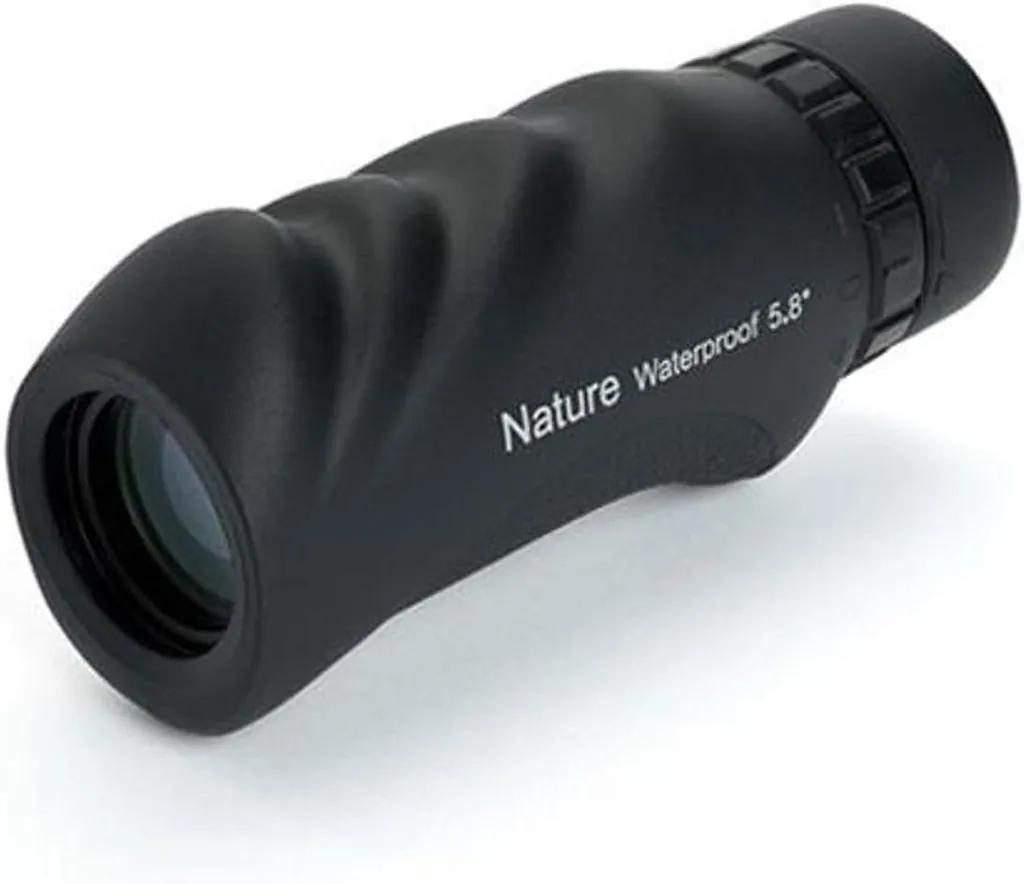
The Nature is our alternative for hikers who prefer a larger apparent image while keeping the optic relatively small.
At 10×, a subject appears 25% larger in linear dimensions than at 8×. That does not guarantee 25% more usable detail: steadiness and optical quality still matter.
Celestron lists multi-coated optics, BaK-4 prism glass, nitrogen filling and waterproof construction. Its dimensions are 112 × 50 × 35 mm, and a belt-loop case is included.
The compromises are clear: it has the narrowest view, shortest eye relief and longest close-focus distance in this shortlist. Its 2.5 mm exit pupil also favors daylight use.
Choose it for occasional inspection of distant subjects when you can stop and hold it steadily. For moving wildlife, nearby subjects or easier eye placement, compare the 8× alternatives first.
Which Monocular Fits Your Type of Hike?
Your usual observations are a better starting point than the most powerful specification you can afford.
| How you normally use an optic | What to prioritize |
|---|---|
| Brief wildlife and scenery stops | Convenient carrying, moderate magnification and quick access |
| Woodland walks with moving birds | Field of view, close focus and comfortable eye placement |
| Open hills and distant landmarks | Magnification balanced against handheld steadiness |
| Nature walks with nearby subjects | Short close-focus distance |
| Hikes while wearing glasses | Usable eye relief and eyecup adjustment |
| Early or late walks | Exit pupil and optical quality, balanced against carrying size |
| Regular rain exposure | Clearly documented weather protection |
For varied wildlife observation, start with the overall pick. For an optic that accompanies you mainly “just in case,” give more weight to the compact options.
If you have a firm spending limit, our best monoculars under $100 guide provides a separate budget-focused comparison.
How to Choose a Monocular for Hiking
Decide Between 8× and 10× Magnification
An 8× monocular is a sensible starting point for general trail viewing. A 10× model provides a larger apparent image but also makes movement more noticeable.
Nikon explains how magnification affects image shake. The same basic relationship applies to conventional monoculars.
Think about your viewing habits. If you make short stops while tired or exposed to wind, modest magnification may be easier to use. If you sit down and brace your arms to inspect a distant subject, higher magnification can be more practical.
Do not assume all 8× models have wider views than all 10× models. Eyepiece design also matters, so compare the actual field-of-view figures.
Balance Objective Size Against Carrying Convenience
The second number in a specification such as 8×32 is the objective diameter in millimeters.
Larger objectives can collect more light, but usually require a larger body. Exit pupil helps explain the viewing implications:
Exit pupil = objective diameter ÷ magnification.
| Configuration | Calculated exit pupil |
|---|---|
| 8×25 | 3.125 mm |
| 8×32 | 4 mm |
| 8×36 | 4.5 mm |
| 10×25 | 2.5 mm |
A larger exit pupil can help when ambient light is low and your eye’s pupil has expanded sufficiently. It is not a guarantee of a brighter image in daylight or better overall optical quality.
Nikon’s explanation of exit pupil shows how the viewer’s pupil affects the benefit.
For mainly daytime hiking, choosing a smaller objective can be a reasonable way to reduce bulk.
Give Field of View Enough Attention
Field of view describes the width of the scene visible without moving the optic.
A wider view can help you locate a bird in branches or follow an animal moving across a hillside. A narrower view can require more searching before the subject appears in the eyepiece.
Compare figures expressed in the same units and at the same distance. The table above uses feet at 1,000 yards throughout.
Field of view does not measure sharpness, contrast or distortion. It tells you how much scene is visible, not how well every part of it is rendered.
Check Eye Relief With Your Own Glasses
Eye relief is the distance behind the eyepiece where your eye can receive the full view.
Glasses hold your eye farther away, which makes longer eye relief useful. Nikon’s eye-relief guide explains the relationship.
However, the listed number is only a starting point. Lens recess, eyecup shape and your glasses affect the usable distance.
If possible, try the monocular with your normal glasses. Look for a full circular image without having to press the eyepiece against your lenses. Check the return policy if you cannot try it before ordering.
Match Close Focus to the Subjects You Enjoy
A monocular that works well for distant scenery may not focus on a nearby butterfly or bird.
Close focus is the nearest distance at which the device can form a focused image. It is especially relevant if you enjoy examining trail-side nature.
For mostly distant observation, a longer minimum focusing distance may not bother you. For mixed nature viewing, a shorter figure adds flexibility.
It is an easy specification to overlook because it receives less attention than magnification, but it can change how often you use the optic.
Read Weather-Protection Claims Carefully
Waterproofing, nitrogen filling and rubber armor describe different features.
Waterproofing concerns resistance to water entering the device. Nitrogen filling in a sealed design helps control internal fogging. Rubber armor protects the exterior and can improve grip.
None of these makes an optic immune to every outdoor condition. External lenses can still become wet or fogged, and grit can damage surfaces.
Where a manufacturer provides a depth, duration or IP rating, use that stated limit. Where it simply says “waterproof,” do not invent a more specific rating.
Check the Carrying Setup Before Buying
Weight is only part of portability. Shape and access matter too.
A short, broad monocular may not fit the same pocket as a longer, narrower one. A case can protect the optic but also make it slower to retrieve.
Measure the pocket or pouch you intend to use, and remember to include the case if you will keep it attached.
For occasional viewing, easy access can be more valuable than adding accessories. A phone adapter and tripod may be useful for a photography-focused outing, but they change the carrying requirements substantially.
Monocular or Binoculars: Which Is Better for Hiking?
A monocular suits hikers who want brief magnified views without dedicating much space to an optic.
Binoculars are worth considering when wildlife observation is a major purpose of the trip. Many people find using both eyes more comfortable for prolonged viewing.
Compare actual products rather than assuming a monocular always weighs half as much or always takes up less room. Large monoculars and compact binoculars can overlap in size and weight.
A useful decision is whether you expect occasional thirty-second observations or extended viewing sessions. For the latter, comfort may justify carrying more equipment.
Common Buying Mistakes
Choosing Magnification Before Everything Else
More power can make the subject larger while making the overall experience less convenient. Check steadiness, viewing width and eye placement before deciding that a larger number is an upgrade.
Treating “ED” or “HD” as a Complete Quality Rating
ED identifies a type of optical glass, while labels such as HD do not provide a complete, standardized performance comparison across products.
Coatings, alignment, lens design and manufacturing quality also matter. A label should prompt further comparison rather than settle it.
Confusing Model Variants
An 8× and 10× version of the same product can have different eye relief, exit pupil and field of view.
Check the exact name and specifications on the retailer listing. Do not assume the photographs or shared customer reviews identify the version you are buying.
Buying for Occasional Photography and Carrying the Extras Every Time
If your primary use is looking through the monocular, select it for that purpose first. Phone compatibility is worth considering when you genuinely intend to take photographs, but it need not determine every hiking purchase.
Frequently Asked Questions
What is the best monocular for hiking?
Our overall research-based choice is the Opticron Explorer WA ED-R 8×32. For hikers who mainly want a small optic for occasional stops, the T4 Trailfinder WP 8×25 is the more compact alternative.
Is an 8× monocular powerful enough for hiking?
For general scenery and wildlife observation, 8× is a practical starting point. Whether it provides enough detail depends on the subject, distance, conditions and quality of the optic.
There is no universal maximum viewing distance attached to an 8× specification.
Is a 10× monocular harder to hold steady?
At the same amount of hand movement, higher magnification makes image movement more noticeable. You may still use 10× comfortably, especially when stopped and braced.
Choose based on the view you can use consistently, not magnification alone.
Can I use a monocular while walking?
Stop before viewing through it. Magnification narrows your awareness of the nearby ground and can make it harder to notice obstacles.
Move to a stable place, locate the subject with your unaided eye, then raise the optic.
Do hiking monoculars need batteries?
The conventional optical models in this guide do not need batteries to provide their magnified view.
Electronic night-vision and thermal devices are different. Our explanation of how thermal monoculars work covers that distinction.
Will a larger objective let me see in complete darkness?
No. A conventional monocular needs available light. A larger objective does not turn it into a thermal or night-vision device.
How much should I spend?
Start with the specifications you need and compare current prices for suitable models.
A higher price is easier to justify when it buys a feature you will use, such as more comfortable eye placement or a better-suited viewing configuration. For occasional daytime observations, a compact, less expensive option may be sufficient.
Final Verdict
Choose the Explorer WA ED-R for varied trail observation, the Trailfinder for compact carrying, the Field Tube for its wide view and documented IPX7 protection, the Solo 8×36 for its larger objective, or the Nature 10×25 when compact 10× viewing is your priority.
The right hiking monocular should fit your normal observations and carrying habits. Match the field of view, eye relief and close focus to your needs before deciding how much magnification to buy.

Elliot Vantage is an optics enthusiast and the editor behind Optic Horizon, covering monoculars, binoculars, thermal optics, and related outdoor gear. He researches manufacturer documentation, optical specifications, product features, pricing, and use-case differences to help readers understand their options and choose equipment that fits their needs.