
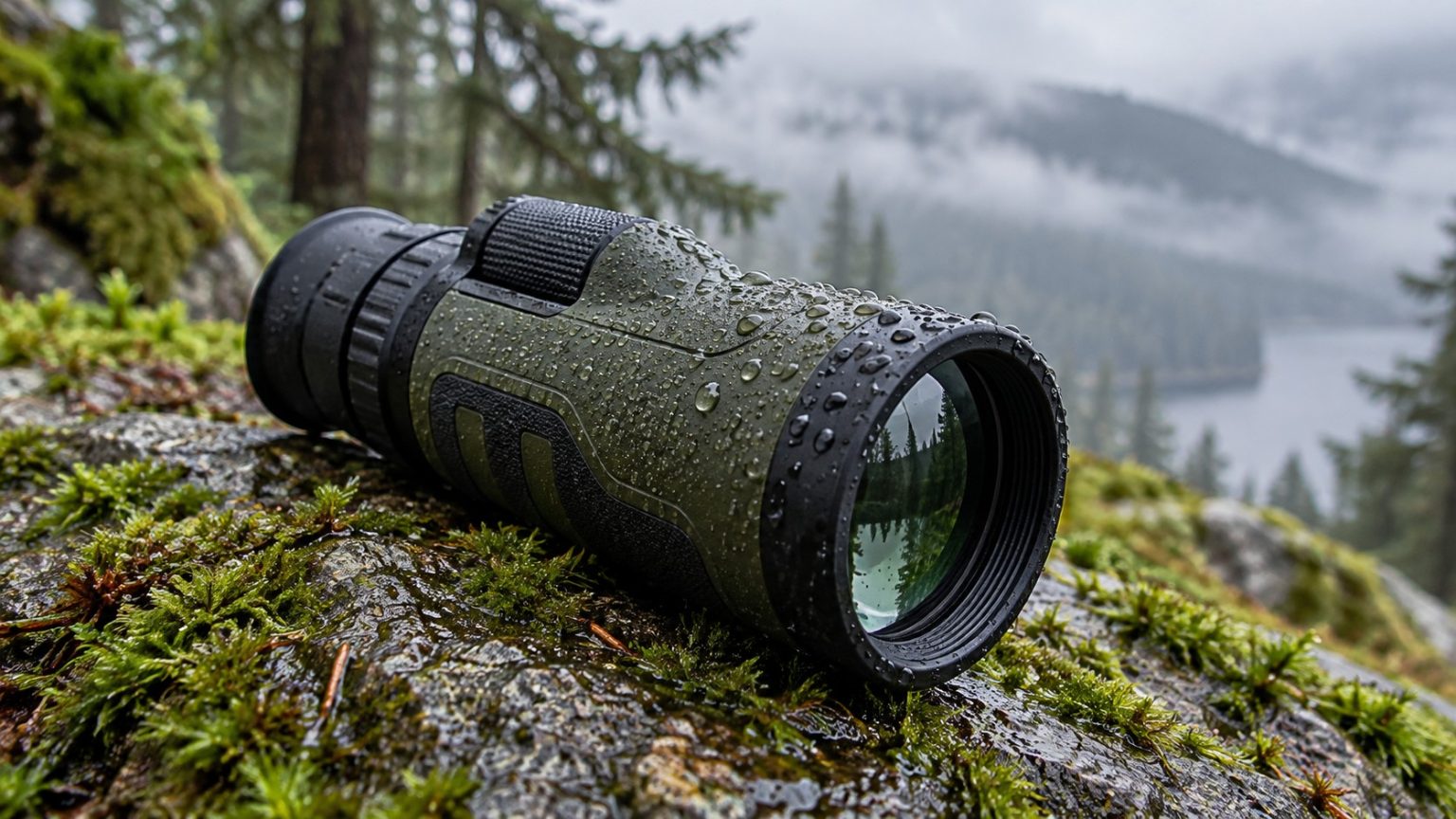
When comparing waterproof vs fogproof monoculars, keep two separate problems in mind: water getting inside the instrument, and condensation forming where you look through it. Waterproofing addresses liquid ingress under stated conditions. Fogproof construction is intended to reduce condensation inside the optical system. Neither claim promises that rain or mist can never obscure the outside of a lens.
That distinction matters on a wet trail. A monocular can remain sealed and undamaged while its front surface is covered in droplets. It can also have a dry exterior yet develop an internal haze that needs manufacturer attention. Reading the protection claims carefully helps you tell those situations apart.
What waterproofing actually protects
Waterproof construction uses a sealed housing to resist water entering the instrument. The useful question is not simply whether the word appears on the box, but under what conditions the manufacturer supports the claim.
Look for a stated rating, depth, duration and any instructions about caps or covers. A claim with clear limits is more informative than a broad description such as “outdoor ready.”
As one documented example, the Nocs Field Tube 8×32 specification lists IPX7 and gives a depth-and-time limit in its core features. It separately describes nitrogen-filled chambers for internal fog protection. Those are two construction claims, not interchangeable names for one feature. Check the current instructions for the exact model rather than applying that example to every monocular.
A waterproof rating is also not a care routine. It does not tell you that a dropped instrument still has intact seals, that every accessory is equally protected, or that pressure washing is acceptable. Keep caps and covers in the positions specified by the manufacturer, and do not deliberately submerge the optic to test its advertising.
Read an IP rating alongside the manual
IP is an ingress-protection classification. IEC’s explanation of IP ratings describes their role in classifying protection against solids and water. The characters refer to different kinds of protection, rather than an overall score for ruggedness or optical quality.
If one position is shown as X, do not interpret it as a separate claim of protection at a particular numerical level. Read the actual rating and the maker’s stated limits. A water-protection claim does not automatically supply a dust rating, shock rating or guarantee against every possible way water can reach the product.
For a buyer, three checks are usually more useful than memorizing a chart:
- Does the exact model have a stated water-protection specification?
- What exposure conditions does its manual describe?
- Are any covers, seals or user-accessible compartments involved?
If the listing and manual disagree, ask the manufacturer before relying on the more generous interpretation. A comparison site cannot expand the conditions the maker actually supports.
Fogproof usually refers to the inside
Internal condensation forms when moisture inside an optical instrument condenses on internal surfaces. Sealing the body and filling it with a dry gas, commonly nitrogen, is a familiar way of reducing that problem.
Nikon’s weather-protection overview explains waterproof construction and nitrogen filling as related features. The practical purpose is to keep a usable internal optical path as outdoor conditions change.
That does not make the outer glass incapable of fogging. Step from a cold environment into warm, humid air and condensation may appear on the exposed eyepiece or objective. Your breath can also fog a cold external eyepiece. Dry gas inside the housing cannot prevent moisture in the surrounding air from landing on the outside.
The word fogproof should therefore prompt a specific question: internal fog protection, or an additional surface treatment? If a manufacturer claims both, read the description of each. Do not infer an exterior anti-fog coating from a nitrogen-purging statement alone.
Four situations that can look similar
| Situation | What is happening | Sensible next step |
|---|---|---|
| Visible raindrops on the front lens | Water is obstructing an exposed surface | Shelter the optic and follow its lens-care instructions |
| Mist appears after moving from cold air into warmth | Exterior condensation may have formed | Let the instrument adjust naturally; avoid repeated rubbing |
| A haze seems trapped behind a dry outer surface | Internal moisture or another fault is possible | Follow the manufacturer’s inspection and service guidance |
| The landscape itself is hidden by rain or fog | The view through the atmosphere is restricted | Accept the visibility limit rather than repeatedly adjusting focus |
You do not need to dismantle the monocular to investigate a hazy view. First check the exposed surfaces in suitable light without touching them unnecessarily. If the obstruction cannot be explained externally or does not clear as expected, contact support.
Rubber armor is a different feature
A grippy outer covering can make a wet monocular easier to hold. It may also provide some protection from everyday knocks, depending on the design. Its texture alone says nothing reliable about the seals underneath.
Likewise, a smooth-bodied monocular is not automatically unsealed. Judge the documented construction, not whether the product looks rugged in a photograph.
This is especially relevant when choosing a small trail optic. Weight, size and grip all affect how you carry it, but they do not replace a weather specification. Our monocular buying guide puts those features into a broader checklist.
Handling a wet monocular on the trail
Keep the instrument accessible without leaving it exposed unnecessarily. A case or suitable pocket can limit the amount of rain reaching the objective between observations. Use the strap so wet fingers do not turn a brief look into an accidental drop.
If the view becomes blurry during rain, check for droplets before changing focus. Focusing cannot make an obstructed lens surface clear. Once the surface is clear, use the method in how to use a monocular to distinguish focus from hand movement or eye-position problems.
Avoid blowing warm, moist breath over a cold eyepiece as a quick fix. Do not scrape ice, use a hair dryer or apply an improvised chemical treatment. Follow the care instructions for the lens coatings and housing in front of you.
When you return indoors, let the optic adjust and dry as directed before closing it in a case. Packing a wet instrument into a damp pouch is an avoidable storage problem even when its internal seals are sound.
How much protection should you prioritize?
For an optic that will regularly accompany you in changeable weather, a clear waterproof specification and internal fog protection are useful buying criteria. They reduce uncertainty about the conditions in which the instrument is intended to work.
For short trips with easy shelter, you may weigh size or eyepiece comfort more heavily. Be honest about the way you handle gear, though. A monocular carried in an open jacket pocket on wet walks faces different exposure from one used occasionally from a sheltered viewpoint.
You can compare suitable starting points in the best monoculars for hiking. If your budget is fixed, use the same protection checks when reading our monoculars under $100 guide, instead of treating “weather resistant” as a precise substitute for a documented rating.
Finally, make sure protection is not the only feature you verify. A sealed optic still needs a comfortable eyepiece and a close-focus distance that suits your subjects. Buy the protection you need, understand its limits, and give the instrument a chance to dry after the outing.

Elliot Vantage is an optics enthusiast and the editor behind Optic Horizon, covering monoculars, binoculars, thermal optics, and related outdoor gear. He researches manufacturer documentation, optical specifications, product features, pricing, and use-case differences to help readers understand their options and choose equipment that fits their needs.